
AI-Powered Pavement Assessment: The Pavement Group Success Story
In the pavement maintenance and construction industry, accuracy and consistency in surface evaluations are critical. For The Pavement Group (TPG), a leader in commercial pavement solutions across North America, traditional site inspections presented multiple challenges. Manual assessments were time-consuming, prone to subjectivity, and limited by the availability of trained inspectors. At the same time, clients demanded faster turnaround, more transparency, and standardized metrics they could trust across portfolios of properties.
Recognizing the need for innovation, TPG partnered with LATO AI to design an AI-powered pavement scoring system that integrates computer vision, PASER-based rating logic, and intuitive dashboards. The goal was clear: create a digital assistant capable of automatically scoring pavement conditions from photos, providing clients with reliable insights while giving contractors and administrators end-to-end visibility into site assessments.

Instead of settling for slow, manual evaluations, TPG now leverages an AI-driven system that transforms raw site photos into standardized PASER scores within seconds. What once relied on inspectors’ judgment is now backed by automated, data-rich analysis. The platform doesn’t just speed up reporting—it delivers a new level of consistency and transparency that helps clients plan budgets, prioritize repairs, and scale portfolio management with confidence.
The Challenge: Eliminating Subjectivity and Streamlining Evaluations
Before adopting an AI-powered pavement management solution, The Pavement Group (TPG) faced critical challenges that limited both operational efficiency and client satisfaction. Traditional pavement assessment methods relied heavily on manual inspections and subjective PASER ratings, which created bottlenecks across the workflow.
- Subjective and Inconsistent PASER RatingsPavement inspections were based on human judgment, and two different inspectors could assign two very different scores for the same surface. This lack of consistency made it difficult for property managers to trust the results, undermining decision-making for long-term maintenance and capital planning.
- Time-Consuming Site InspectionsEvaluating large portfolios of commercial properties required days—or even weeks—of manual effort. The delay in generating assessment reports slowed down clients’ ability to approve budgets, schedule contractors, and prioritize urgent repairs.
- Limited Scalability Across PortfoliosAs TPG expanded its footprint across North America, the need for standardized, scalable tools became urgent. Without automation, onboarding more inspectors or handling hundreds of properties simultaneously was both costly and inefficient.
- Fragmented Reporting ToolsPhotos, notes, and PASER evaluations were scattered across different spreadsheets and storage systems. This fragmentation created risks of data loss, duplication, and reporting errors—resulting in extra work for admins and less clarity for clients.
- Demand for Transparency and PredictabilityCommercial property owners and facility managers wanted more than just a numeric score; they expected clear documentation, photo evidence, and reliable forecasting. Manual workflows could not deliver the level of transparency and accountability that clients increasingly required.
For The Pavement Group, these challenges were more than operational headaches—they were roadblocks to growth. Without a consistent, technology-driven system for pavement inspections and PASER ratings, scaling operations and building client trust would remain out of reach.

Our Goal: Standardizing Road Surface Assessments Through AI
The Pavement Group set out to modernize the way pavement conditions are evaluated, moving away from slow, subjective, and manual inspections toward a data-driven, AI-powered pavement assessment system. The vision was not only to automate PASER scoring but also to transform how property managers, contractors, and clients interact with inspection data across large portfolios.
Key objectives included:
- Automated PASER Scoring at ScaleDeploy an AI scoring engine capable of analyzing site photos and delivering consistent, objective PASER ratings across thousands of properties—eliminating the subjectivity of human-only inspections.
- Real-Time Pavement InsightsProvide instant condition assessments as soon as images are uploaded, enabling contractors and property managers to make faster, more informed decisions about budgeting, repairs, and long-term maintenance planning.
- Seamless Pavement Management Software IntegrationDesign a system that integrates directly into TPG’s existing property and portfolio workflows, ensuring easy adoption while extending functionality with AI-powered features.
- Enhanced Transparency and Client ConfidenceMove beyond simple numeric scores by including contextual data such as distress types, surface categories (asphalt, concrete, gravel, etc.), and color-coded condition labels (Good, Fair, Poor).
- Scalability for Multi-Site PortfoliosCreate a solution capable of managing hundreds of commercial properties simultaneously, with consistent reporting standards and unified dashboards that simplify portfolio-wide decision-making.
- Future-Proof Pavement TechnologyEstablish a foundation for advanced features like predictive maintenance, zone-based scoring, heatmaps, and AI-powered repair forecasting to keep The Pavement Group ahead of industry standards.
By aligning these goals, TPG and LATO AI worked together to develop a pavement management platform powered by artificial intelligence—a solution designed to eliminate inefficiencies, deliver transparency, and redefine industry expectations.
At a Glance: The AI Pavement Evaluation Engine
The Pavement AI Scoring Platform, custom-built for The Pavement Group by LATO AI, represents a breakthrough in how pavement assessments are conducted and reported. Instead of relying on subjective, manual inspections, the system uses AI-powered image analysis and automated PASER scoring to deliver consistent, transparent, and scalable evaluations across entire property portfolios.
More than a simple scoring tool, this pavement management software integrates directly with TPG’s existing infrastructure, streamlining the entire workflow from field inspections to executive reporting. With support for multiple property types, customizable scoring paths, and intuitive dashboards, the platform is designed to scale across thousands of sites while providing instant, reliable results.
Key Deliverables of the Platform
- Admin Dashboard: Centralized OversightThe dashboard acts as the control center, giving managers a complete overview of all site activity. From property portfolios and zone definitions to scoring logs and system notifications, every detail is captured in one place. Administrators can monitor real-time performance, drill down into site-level reports, and ensure that the scoring process remains consistent across hundreds of properties.
- AI-Powered PASER Scoring EngineAt the heart of the platform is an AI engine that automatically evaluates pavement images, detects visible distresses, and applies PASER logic to assign a score from 1 to 10. The system processes photos immediately after upload, eliminating delays and human subjectivity. This automation ensures faster reporting, more reliable assessments, and a standardized scoring method trusted across all portfolios.
- Contextual Data EnrichmentEach score is supported with additional insights that move beyond just a number. The platform provides condition labels such as Good, Fair, or Poor, along with color-coded indicators for instant recognition. It also identifies surface types like asphalt or concrete and lists the specific distresses found, giving clients complete transparency into the reasoning behind each evaluation.
- Zone-Based EvaluationsInstead of treating a property as a single unit, the system allows inspectors to divide sites into zones such as parking lots, sidewalks, or driveways. Each zone can be documented with geotagged photos and scored independently, creating a detailed map of conditions. This granularity enables property managers to prioritize repairs strategically and allocate budgets more effectively.
- Integrated Dashboard ViewsThe platform offers multiple viewing modes to fit different reporting needs. A site view provides an overall PASER rating with color-coded condition labels, while image view highlights individual scores with ribbons and descriptions. For high-level summaries, a compact view displays numeric scores only, making it easy to compare results across dozens of properties in seconds.
- Manual Override CapabilitiesWhile AI handles most evaluations automatically, administrators retain full control to adjust scores when local knowledge or contextual judgment is needed. A site score can be manually updated to better reflect reality, especially in cases where the weighted average may dilute severe damage. This balance between automation and human input ensures accuracy without losing flexibility.
- Future-Ready DesignThe platform is not static—it was built to evolve alongside the needs of The Pavement Group. Planned enhancements include predictive maintenance analytics, zone-based heatmaps, and automated repair prioritization. This future-proof approach ensures the investment grows in value over time, keeping the company at the forefront of pavement assessment technology.
Together, these deliverables create a robust yet flexible system that elevates David Alan Clothing’s client engagement. The platform balances automation with personalization, ensuring that every prospective customer feels valued while the team benefits from improved efficiency and higher booking conversions.
How the AI-Powered Platform Works: Transforming Pavement Assessments
Centralized Site Management – Organize Every Property with Precision
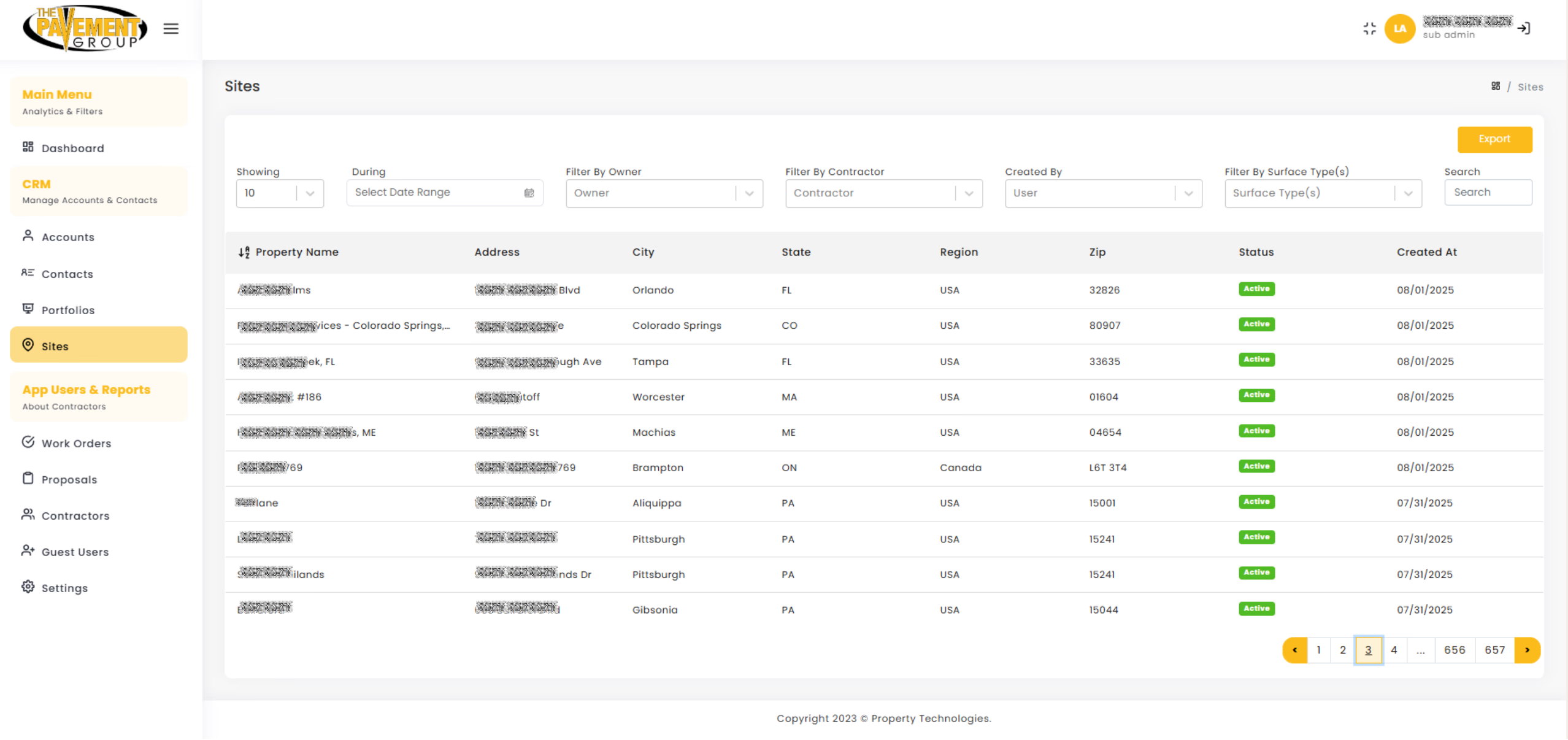
The platform begins with a powerful Sites module, acting as the control hub for property data across entire portfolios. Administrators can register properties, attach addresses, define ownership and contractors, and monitor active status in real time. Advanced filters—by owner, contractor, or surface type—allow teams to quickly find and prioritize the exact assets they need. Bulk export functionality ensures reports can be generated instantly, giving managers visibility across hundreds or even thousands of properties. This level of centralization eliminates spreadsheets and siloed records, replacing them with a live, searchable property database.
Site Assessments and Setup
- When drilling into a property, the Assessment Profile consolidates all the critical details in one place: account and contact information, site name, address, assessment dates, and progress markers. Each profile serves as the foundation for deeper evaluation, storing everything from maintenance plans and attachments to AI-driven scoring outputs. By having a unified, context-rich profile for every site, both contractors and admins gain immediate clarity on project status and client expectations—without having to chase down fragmented documents.
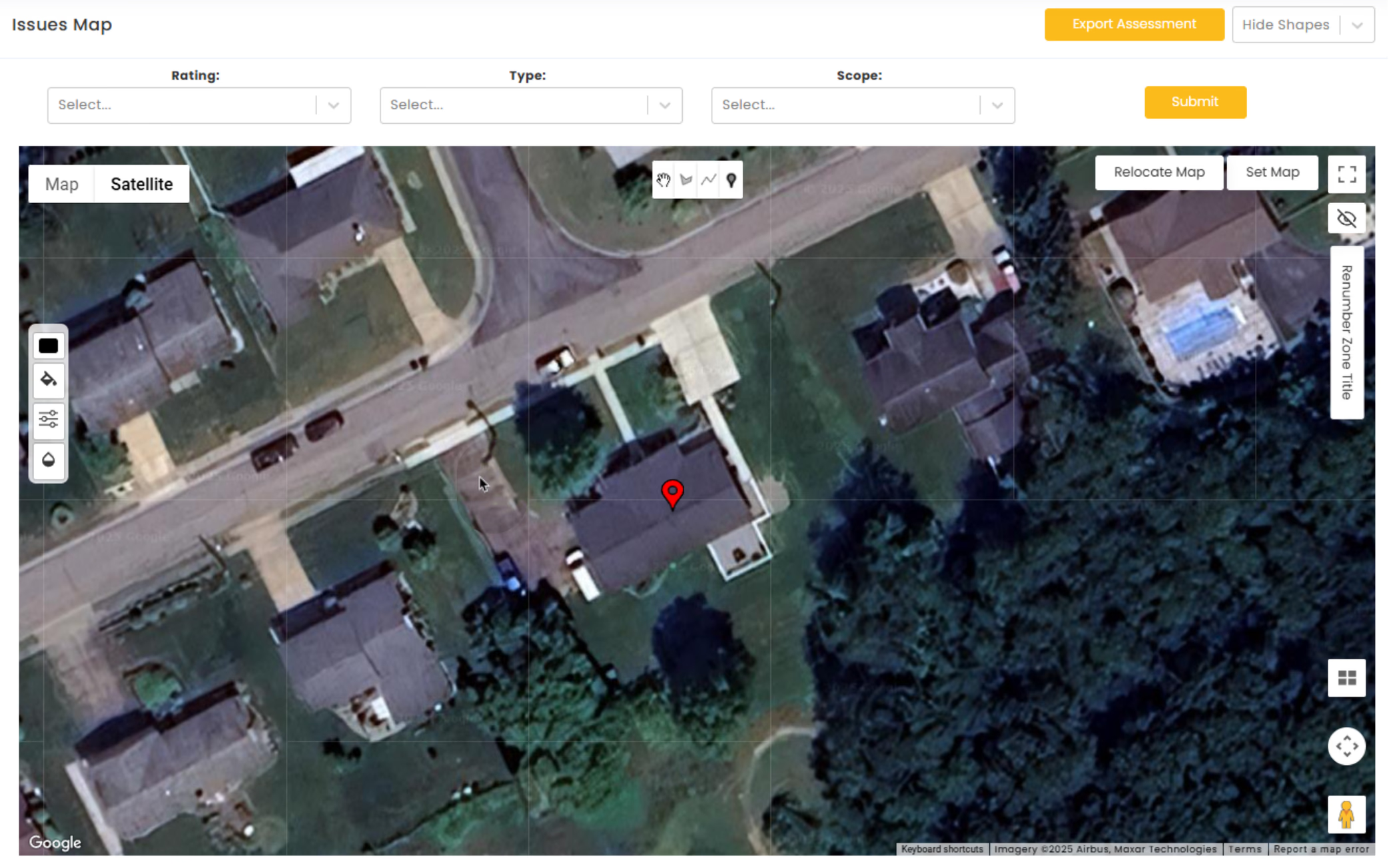
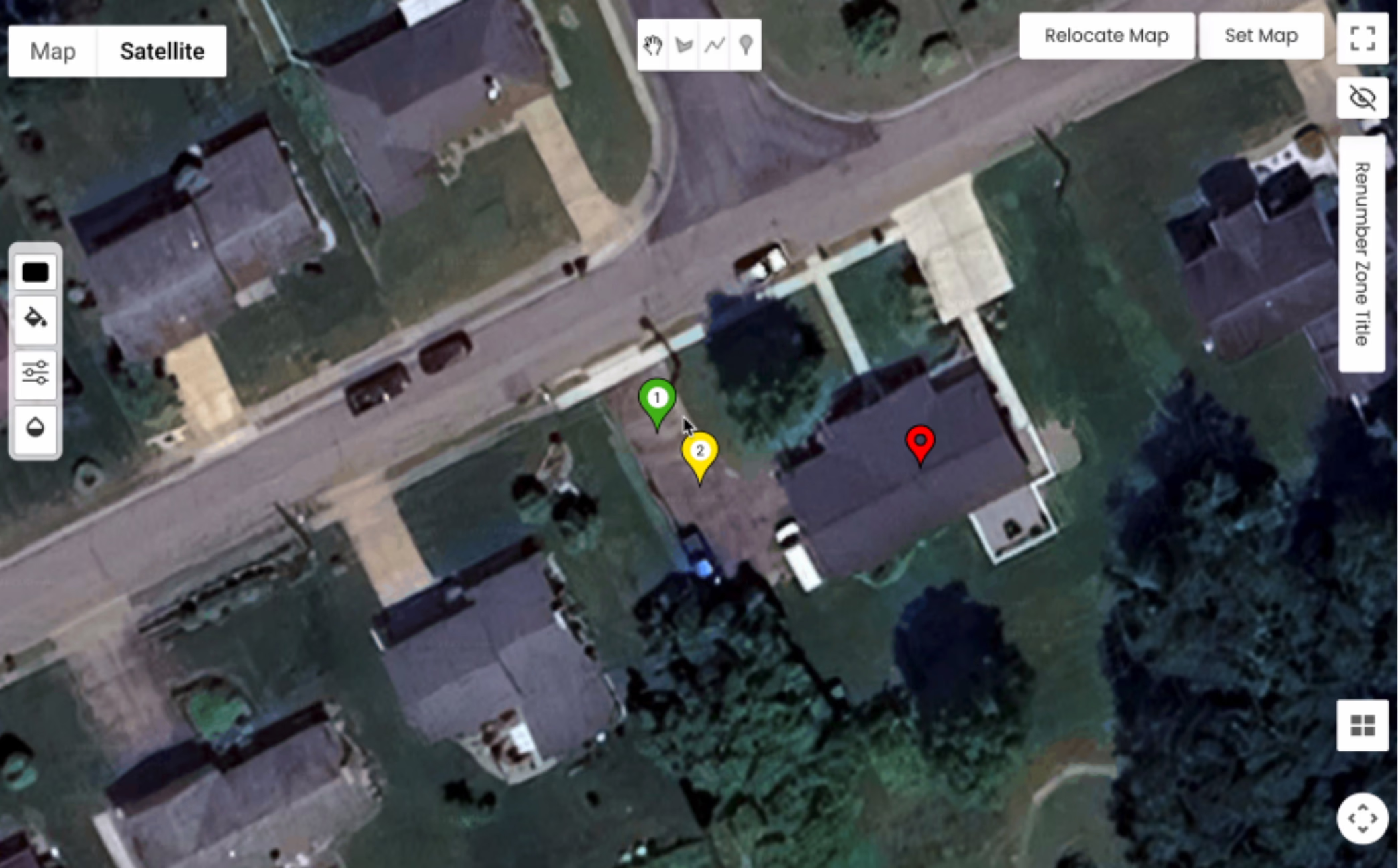
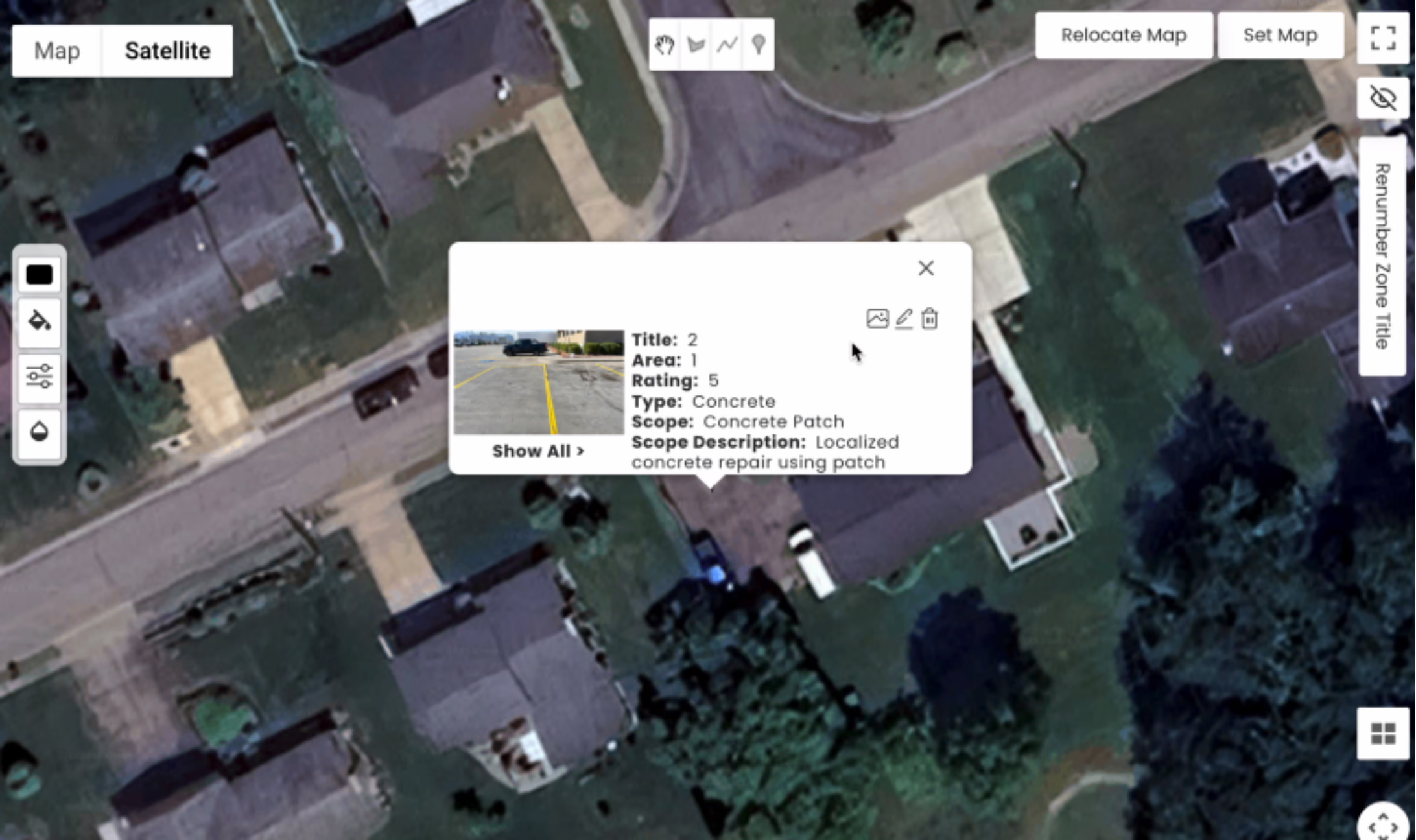
- The Issues Map allows users to pinpoint problems directly on a satellite image of the property. Contractors can drop markers on zones, define their rating, type, and scope, and add visual evidence to support their assessment. This interactive mapping transforms abstract site data into a geospatial view that is intuitive and precise. By tying every assessment to an exact location, teams can better communicate conditions, plan repairs, and validate proposals with clear visual references that clients can easily understand.

Zone Creation – Structured Data for Every Area
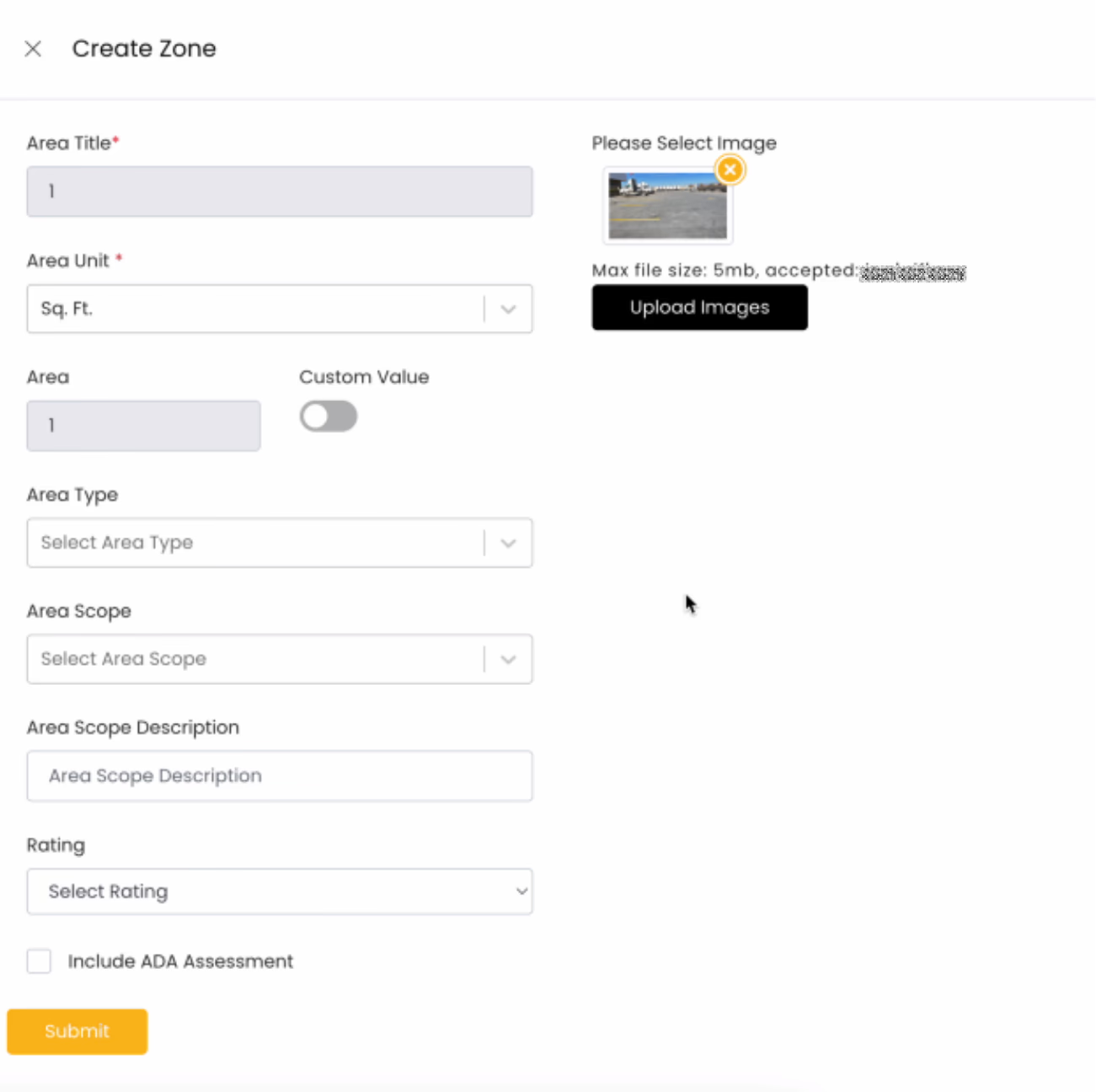
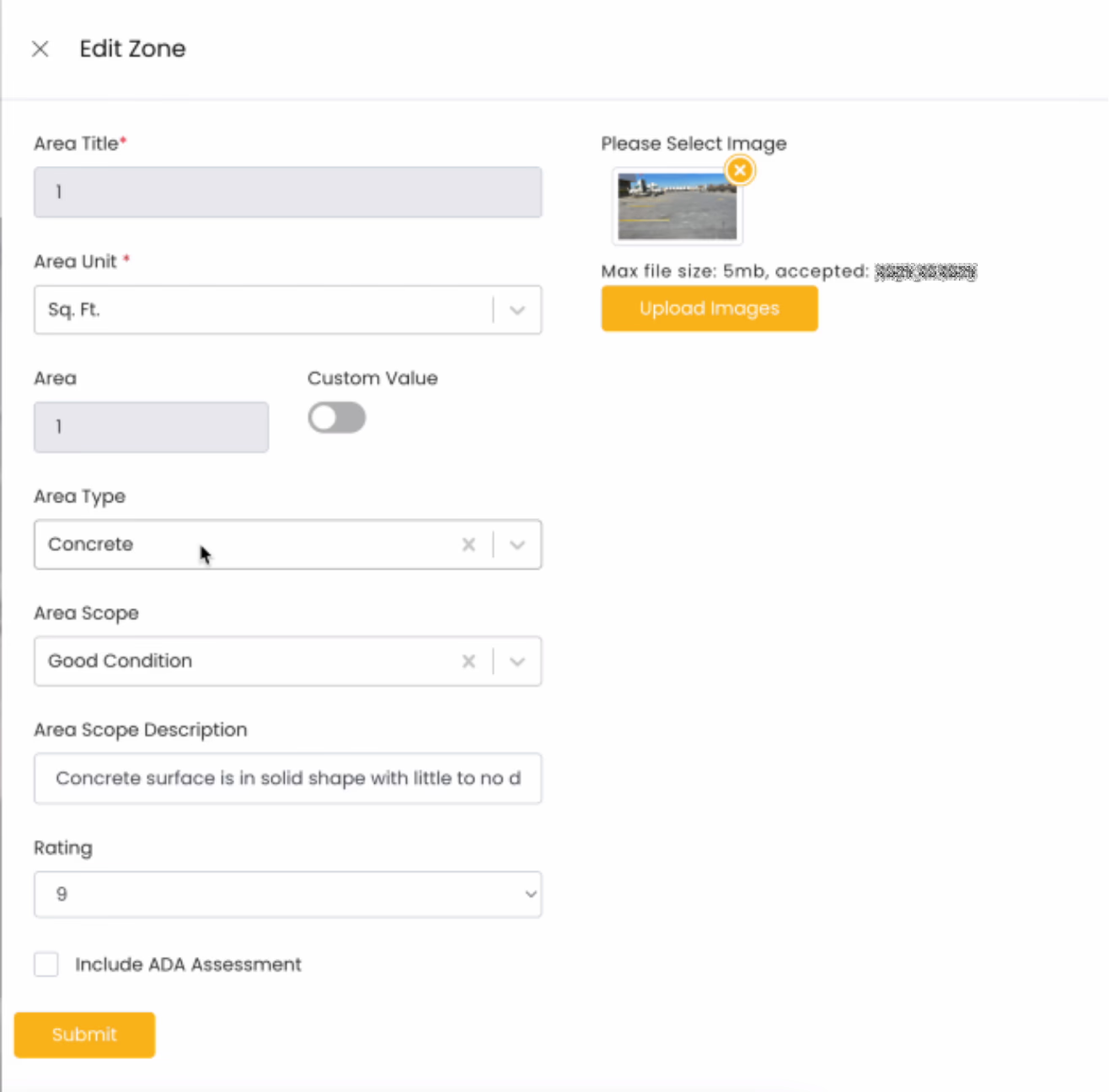
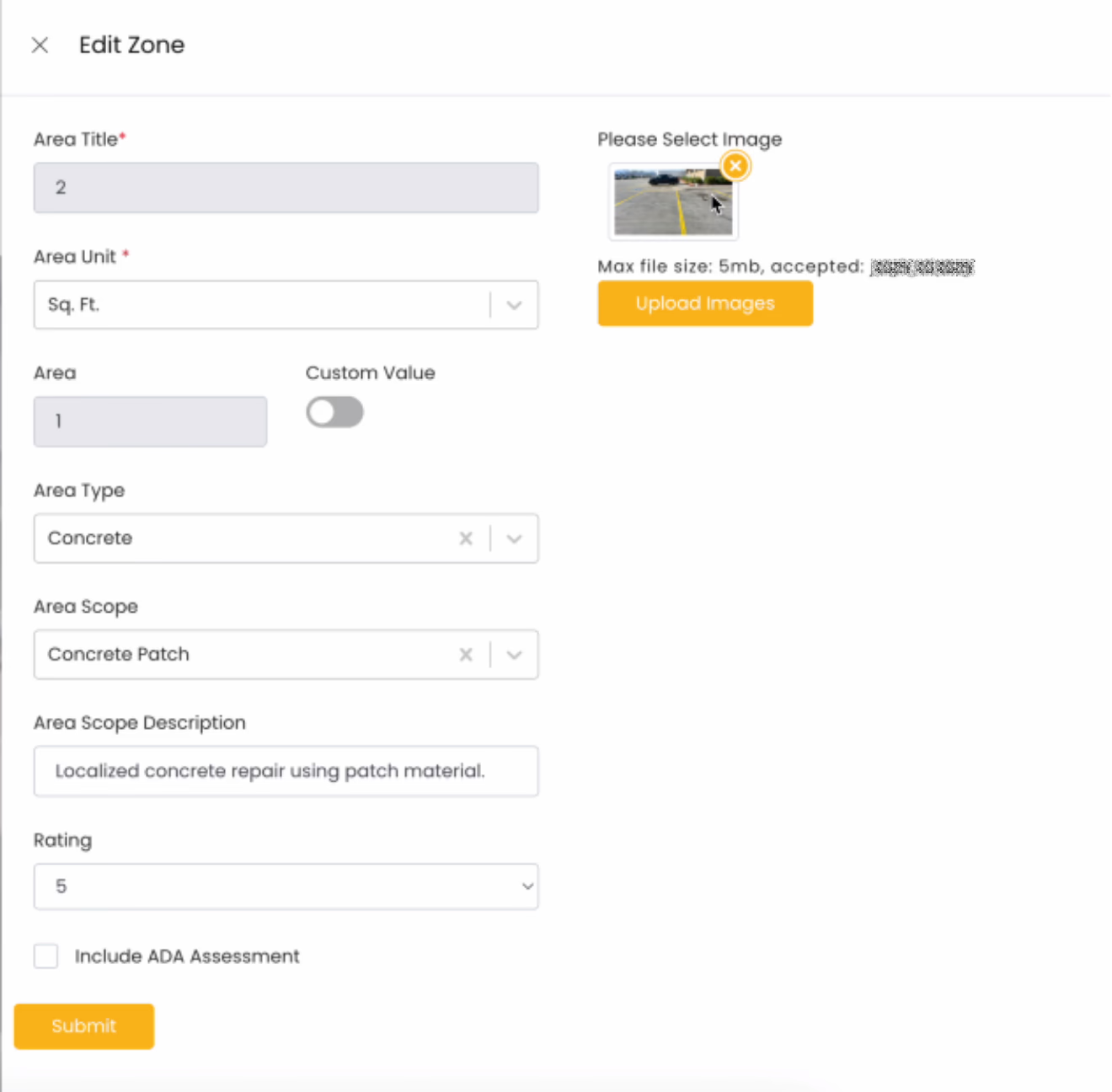
Zones are created to break properties into manageable, measurable segments. Each zone is defined by area (sq. ft.), type (asphalt, concrete, drainage, etc.), and scope of work. Contractors can add descriptions, upload images, and rate the condition of the surface on a standardized scale. This ensures every inch of the property is documented in a structured format, enabling precise scoping and cost estimation later in the workflow.
Zone Categorization and Surface Types
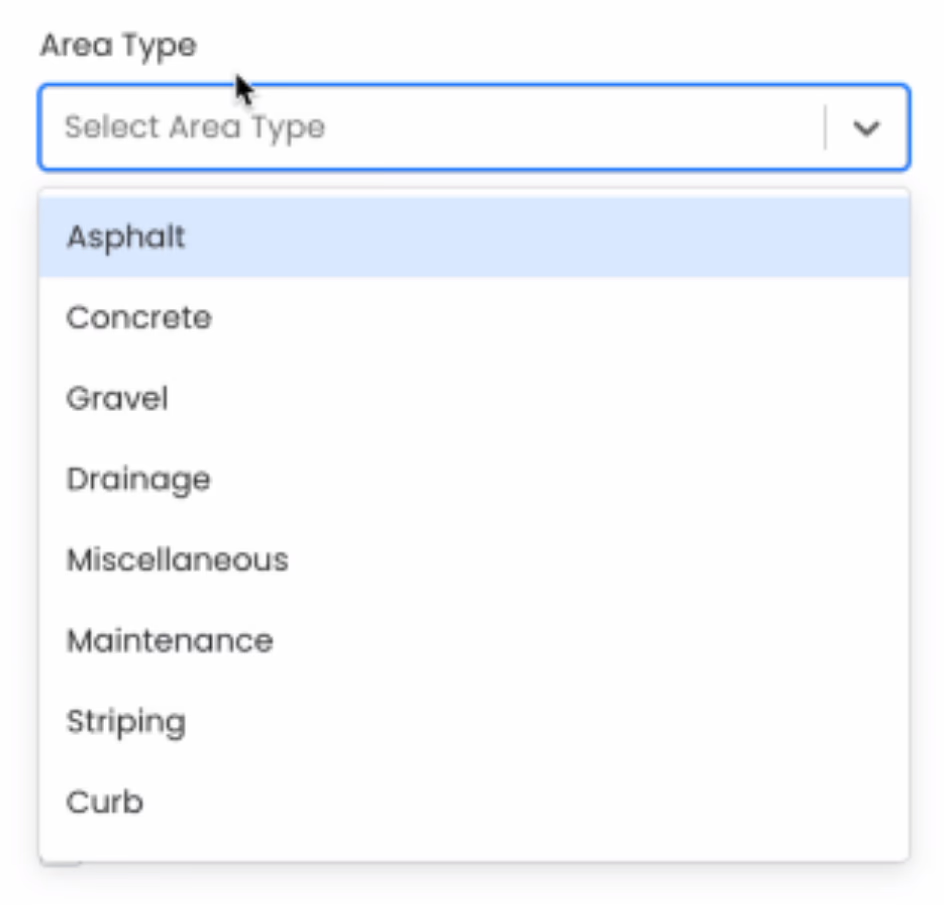
The platform supports a comprehensive list of area types including asphalt, concrete, gravel, drainage, striping, and curbs. This flexibility ensures that assessments capture not just pavement, but all related infrastructure. By standardizing categories across sites and contractors, data becomes consistent, comparable, and ready for analysis. This structured taxonomy is essential for generating accurate maintenance plans and cost forecasts at scale.
Running the AI Scoring Engine
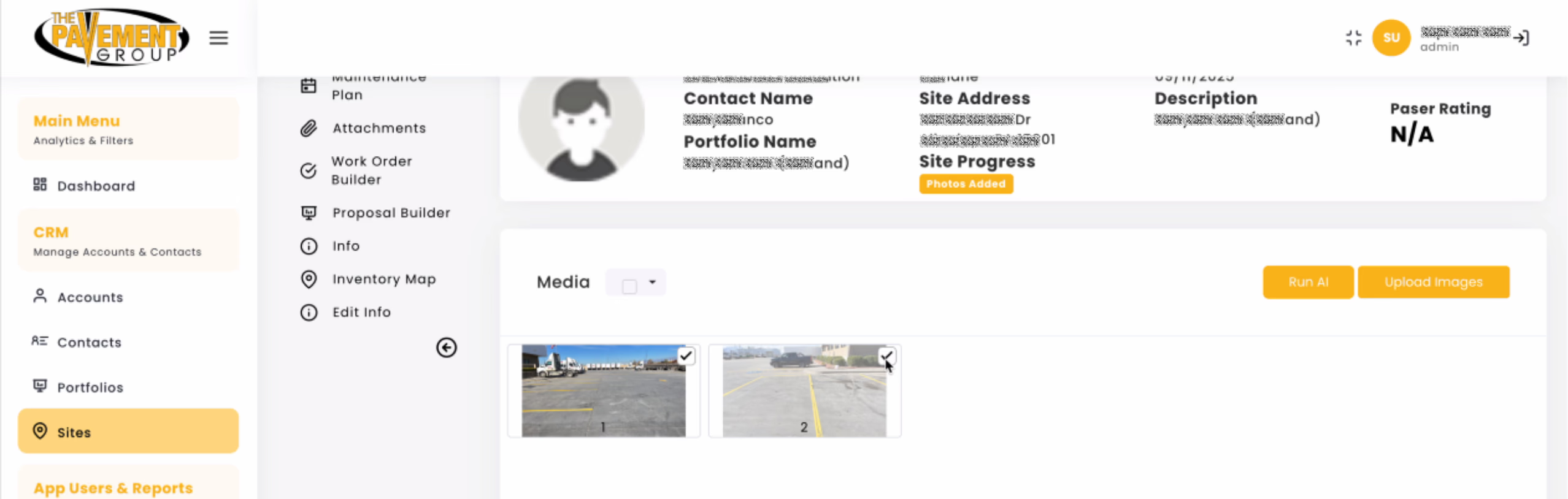
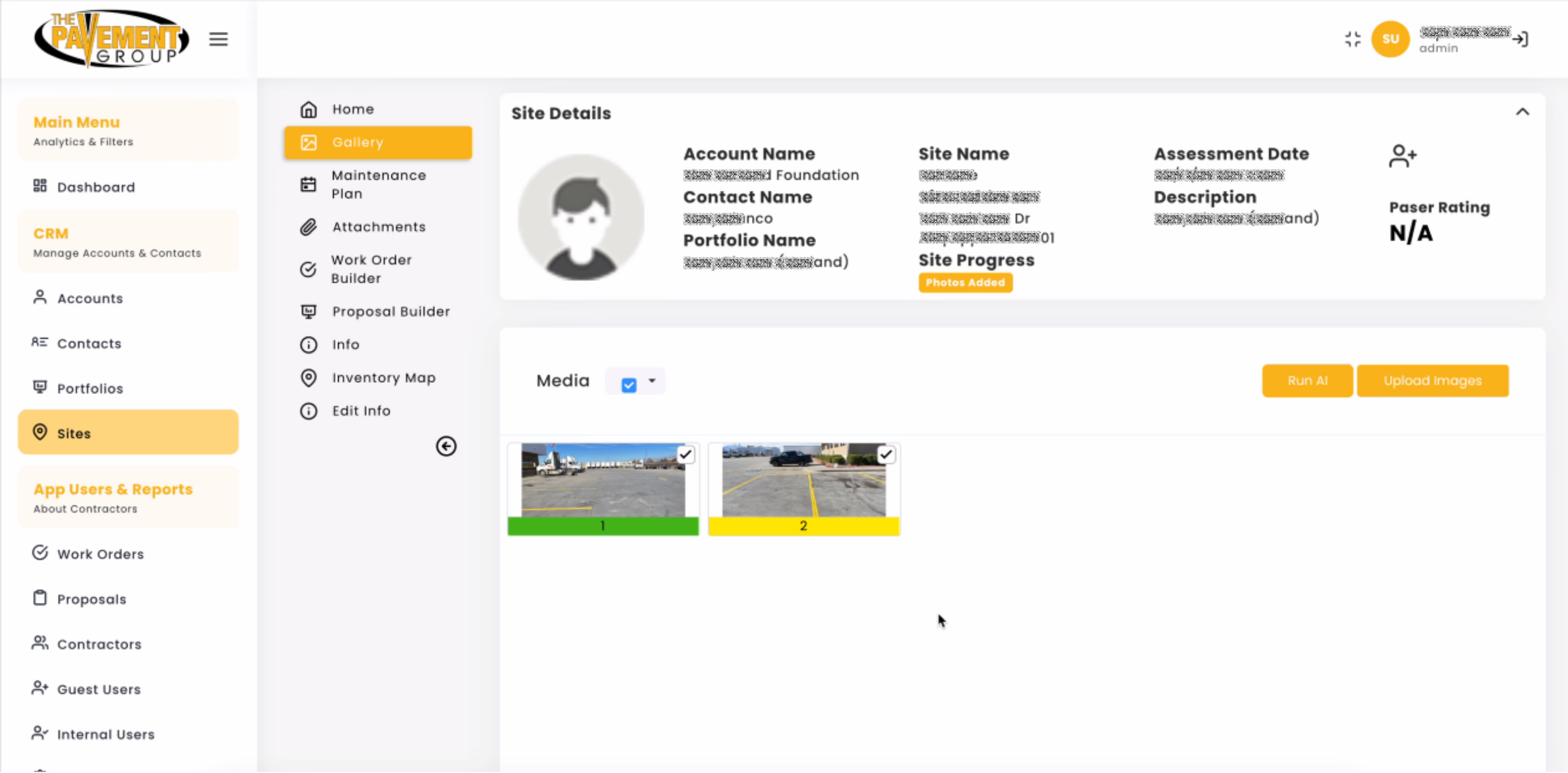
The Media Gallery centralizes photo evidence, giving contractors the ability to upload and categorize images for every zone. Once uploaded, the system can trigger the AI to run automated scoring, linking images directly to PASER evaluations. This blend of visual documentation and AI-driven insights creates a transparent, data-rich record that supports both client communication and long-term asset management.


Dual-View Reporting – Combine Maps and Media for Maximum Clarity
Clients and admins can view assessments in dual format: images tied to their respective zones, displayed both on the satellite map and in the photo gallery. This dual view creates an intuitive “before-and-after” baseline that simplifies client presentations. Stakeholders no longer need to cross-reference multiple files; everything—photos, ratings, descriptions, and geolocations—exists in one seamless interface.
Detailed Zone Evaluations
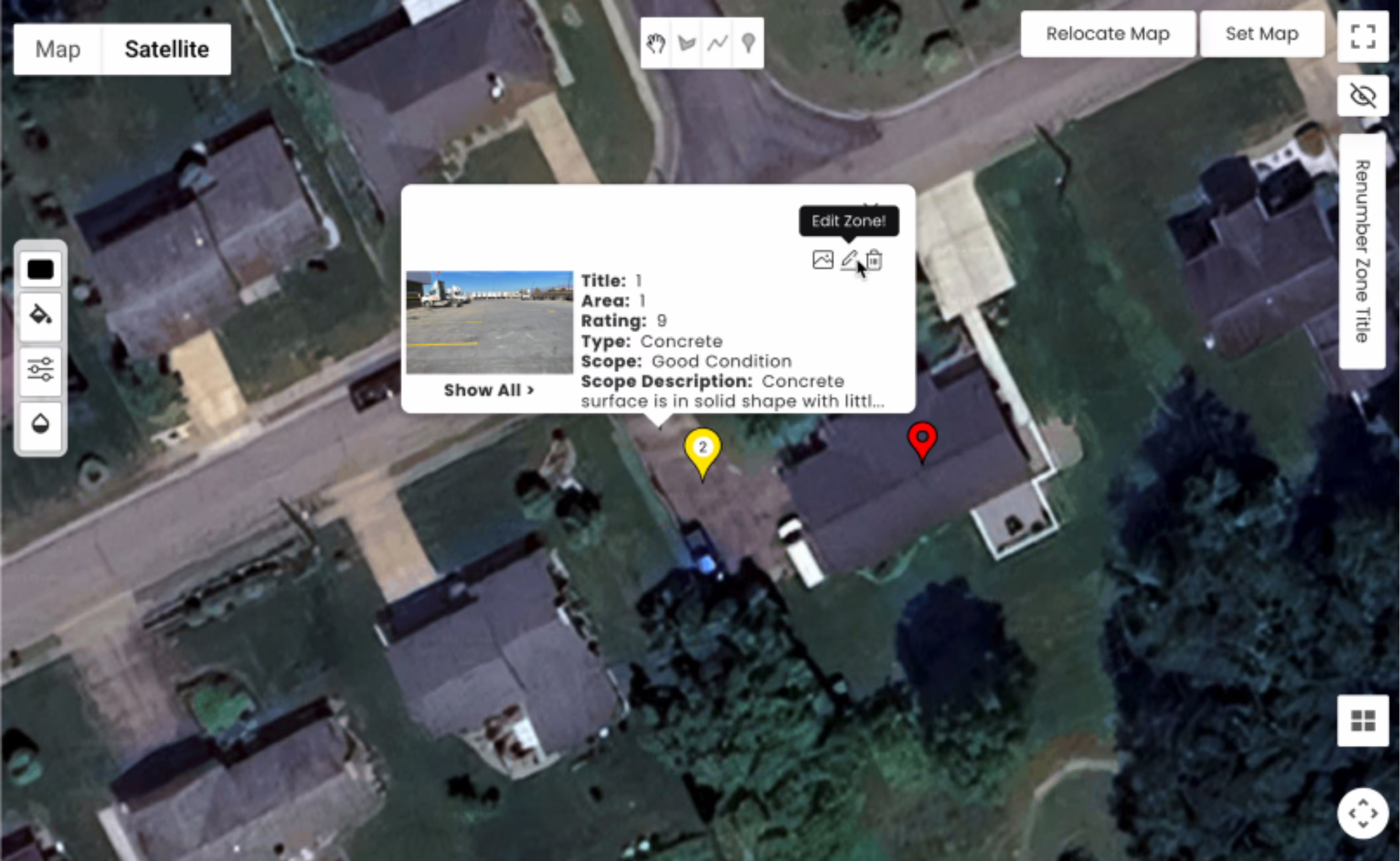
Every zone evaluation includes both a map-based view and a detailed entry form. Users can see the score, area size, type, condition scope, and descriptive AI-generated notes such as “Concrete surface is in solid shape with little to no distress” or “Localized concrete repair using patch material”. These details provide transparency into why a score was assigned, bridging the gap between automated analysis and human understanding.
Automated PASER Scoring – From Subjective to Standardized
Once zones are documented, the AI engine processes photos and inputs to generate a PASER rating—a nationally recognized standard for pavement condition. Scores are displayed clearly in the site profile, with color-coded indicators for quick reference. By shifting from subjective visual assessments to AI-backed standardized scoring, TPG ensures consistency across evaluators, transparency for clients, and scalability for managing large property portfolios.

Key Features
- AI-Powered PASER Scoring: Automatically analyzes pavement images, detects distresses, and applies PASER rating logic (1–10).
- Zone-Based Evaluations: Supports segmentation of large sites into zones, each with its own AI-generated score.
- Contextual Data Enrichment: Ratings include condition labels (Good, Fair, Poor), color-coded indicators, surface type, and distress descriptions.
- Integrated Dashboard Views: Scores displayed across site view, image view, and compact reporting formats.
- Manual Override: Admins can adjust site-level ratings to account for field-specific knowledge.
- Scalable Infrastructure: Designed to handle thousands of properties and images seamlessly, ensuring reliability and growth.
Why It Matters
Traditional pavement inspections are slow, inconsistent, and subjective. By adopting AI pavement management software, The Pavement Group can:
- Ensure Consistency with standardized PASER ratings across all sites and inspectors.
- Accelerate Decision-Making by delivering real-time insights as soon as photos are uploaded.
- Improve Transparency with enriched scoring details that explain not just the “what” but the “why.”
- Scale Efficiently across large property portfolios without adding more staff.
- Build Client Trust by offering clear, data-driven reports that guide budgeting and maintenance priorities.
Conclusion: Setting a New Standard for Pavement Assessments
The collaboration between The Pavement Group and LATO AI illustrates how artificial intelligence can revolutionize industries long dependent on manual processes. By replacing subjective inspections with AI-powered pavement assessment software, TPG now delivers evaluations that are faster, more consistent, and more transparent than ever before.
The platform doesn’t just automate PASER scoring—it transforms the entire road surface evaluation workflow. From the moment field inspectors upload geotagged photos, the system runs automated image analysis, detects pavement distresses, and applies standardized PASER rating logic. Results are delivered instantly, enriched with condition labels, surface type categorization, and distress descriptions, ensuring clients not only see a score but also understand the reasoning behind it.
For property managers overseeing hundreds of commercial sites, this shift means immediate access to actionable insights. They can prioritize repairs, allocate budgets more effectively, and compare performance across entire portfolios without waiting days or weeks for manual reports. For contractors and engineers, it means streamlined operations, reduced administrative overhead, and the ability to scale services without compromising quality.
Importantly, the platform is built to grow with industry needs. Features like manual override, zone-based scoring, and future heatmap visualizations ensure flexibility while opening the door to predictive maintenance powered by AI. This forward-looking design not only meets today’s challenges but positions TPG as a technology leader in pavement management.
By embracing an AI-driven pavement scoring system, The Pavement Group has set a new benchmark for accuracy, efficiency, and client trust. What was once a fragmented, subjective process is now a data-driven standard, paving the way (literally and figuratively) for the future of infrastructure assessment.
© 2026, Lato AI - All rights reserved.
Start Transforming Your Business with AI Today
Book Your Consultation
Email us at support@latoai.com or call our AI Smart Receptionist at +1 (412) 347-6663